
 English
 Bangla
 Arabic
Anarkali vs Straight Kurta vs A-Line: Which Silhouette Suits Your Body Type
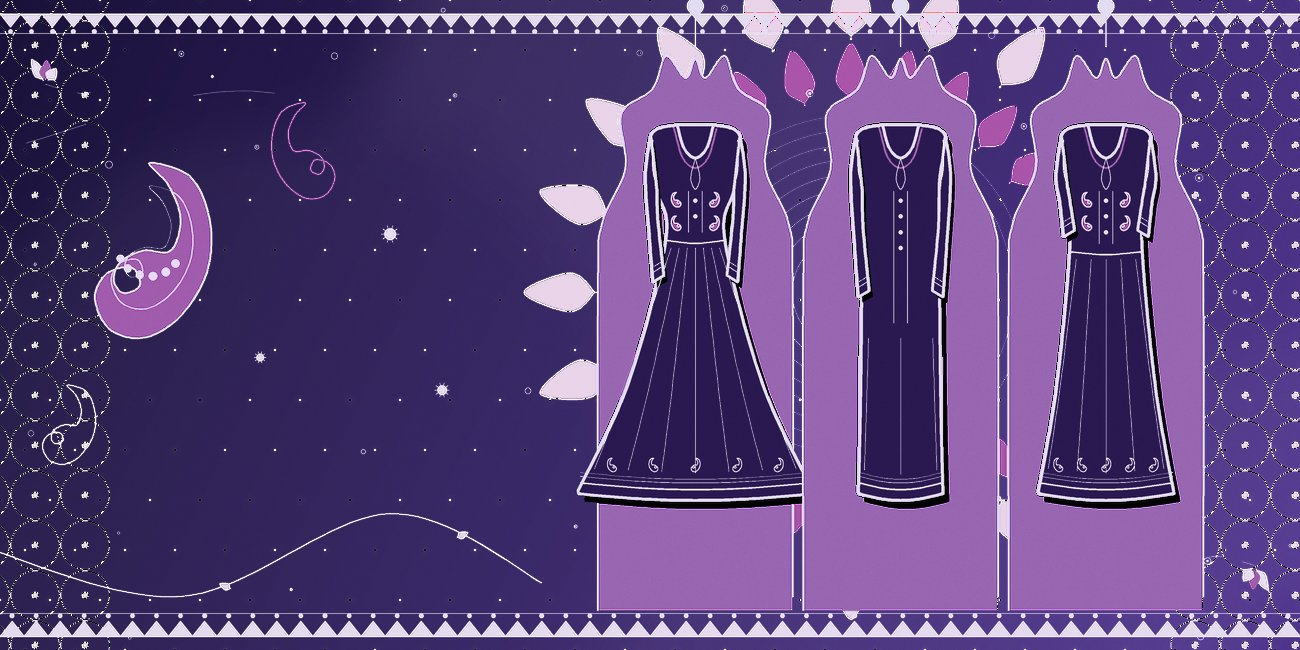
Most disappointing ethnic purchases are not colour mistakes or fabric mistakes. They are silhouette mistakes. The kurta looked beautiful on the model, arrived exactly as photographed, and still felt wrong the moment it was worn. The reason is almost always that the cut was designed to create a shape that does not correspond to the wearer's own proportions.
There are three silhouettes that account for the overwhelming majority of Indian ethnic wear sold today. Understanding what each one actually does to the eye is the fastest way to shop with confidence.
The Anarkali: volume from a raised waistline
An Anarkali is fitted through the bust, gathered or flared from an empire waist that sits just below the chest, and falls into a wide sweep at the hem. The construction does two things. It draws attention upward to the yoke and neckline, and it conceals everything from the ribcage down under a column of moving fabric.
This makes the Anarkali the most forgiving silhouette in ethnic wear. It suits apple and rectangle frames particularly well, because the flare creates a waist rather than requiring one. It is equally effective for anyone who wants coverage through the midsection and hips without resorting to loose, shapeless clothing.
The one caution is height. A floor-length Anarkali on a petite frame can read as overwhelming if the flare begins too high and the volume is too generous. If you are under 5'3", look for a calf-length or ankle-length Anarkali with a moderate flare rather than a heavily panelled floor-sweeping one, and keep the dupatta narrow so it does not add a second layer of bulk.
The straight kurta: a clean vertical line
A straight kurta falls in a more or less unbroken line from shoulder to hem, with minimal shaping at the waist. It is the least dramatic of the three cuts and, for that reason, the most versatile. It reads as understated rather than festive, which is precisely why it works for office wear, daytime events and everyday use.
Straight cuts are ideal for lean, rectangular and hourglass frames. On an hourglass figure, the clean line skims the waist rather than hiding it, and a belt or a fitted palazzo can restore definition if you want it. On a taller frame, the vertical line is genuinely flattering because there is enough height for it to read as elegant rather than boxy.
Where straight kurtas struggle is on frames that carry weight through the midsection, because the cut has no built-in shaping to work with. If that is you and you still want the style, choose a straight kurta with side slits that begin at the hip, which restores movement and breaks up the block of fabric.
The A-line: the reliable middle ground
An A-line kurta is fitted at the shoulder and bust and widens gradually and continuously towards the hem, forming the shape of the letter it is named after. It has less volume than an Anarkali and more shaping than a straight cut, which makes it the safest choice when you are buying online and cannot try before you commit.
The gradual widening skims the hips instead of clinging to them, which suits pear-shaped frames extremely well. It is also the most practical cut for daily wear, because it allows a full stride without the slits or the sweep that the other two silhouettes require.
Getting the proportion right
Silhouette is only half the equation. Length is the other half, and it is where most online purchases go wrong.
- Petite frames generally look best in kurtas ending at or just above the knee, paired with a slim bottom that continues the vertical line.
- Average height gives you the widest range, from mid-thigh to calf length, with very little risk.
- Taller frames can carry calf-length and floor-length pieces that would swamp a shorter wearer, and generally look better avoiding very short kurtas that make the legs look disproportionately long.
The bottom you pair with the kurta matters just as much. A voluminous silhouette on top needs a slim bottom underneath. A straight kurta can carry a wide palazzo. Volume on both halves rarely works outside of very deliberate, very confident styling.
A simple rule to shop by
If you want to conceal, choose flare. If you want to define, choose structure. If you want to do neither and simply want a piece that works reliably across occasions, choose the A-line, which is why it remains the most-purchased cut in Indian ethnic wear year after year.
Before you order, check the product page for two measurements: the total kurta length and the bust measurement. Compare both against a kurta you already own and love. That single habit will do more for your fit accuracy than any amount of guesswork.
Related reading
Recent Posts
Home Improvement Meets Festive: Small Decor Upgrades Before the Guests Arrive
Your First Order on Seoul Street: Payment, Shipping, Tracking and Returns
Reading a Product Page Properly: Fabric, Fit, Lining and What Is Included