
 English
 Bangla
 Arabic
Eid Dressing: Elegant Ethnic for Chaand Raat and Eid Day
Eid dressing sits in a register of its own. It is festive, but it is not the maximalism of a wedding. The tradition places its emphasis on newness, cleanliness and dignity rather than on spectacle, and the best Eid outfits reflect that: beautiful fabric, excellent cut, restrained decoration.
Understanding that register is most of what you need to dress well for it.
Chaand Raat
The night the moon is sighted, and the evening the preparation happens: henna is applied, bangles are bought, the house is readied, and markets stay open late. It is joyful and busy and almost entirely informal.
Register: comfortable, festive, practical.
What works: a light cotton or rayon kurta set, comfortable footwear, minimal jewellery. You will be moving between shops and homes, and henna will occupy your hands for a good part of the evening. Nothing that requires managing.
Save the good clothes. They belong to tomorrow.
Eid day, in the morning
The Eid prayer comes first, and it sets the tone. The tradition calls for new or freshly cleaned clothes, modest in cut, dignified in appearance. Attar or a light fragrance is customary.
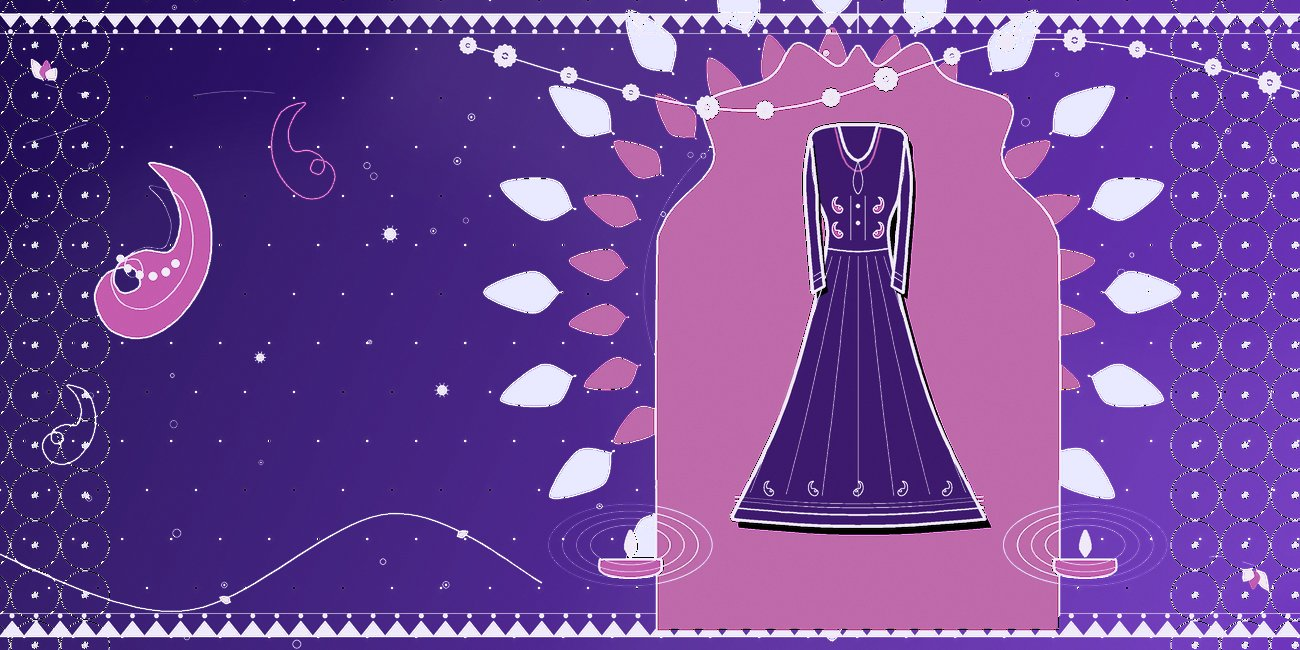
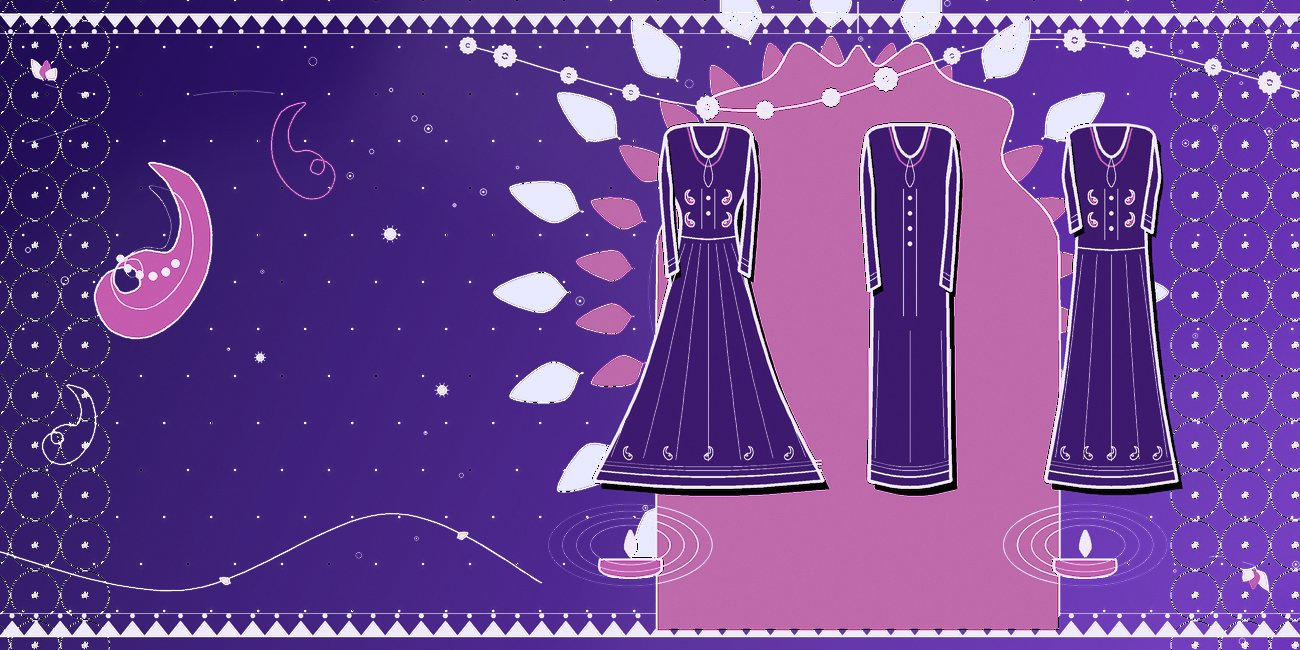
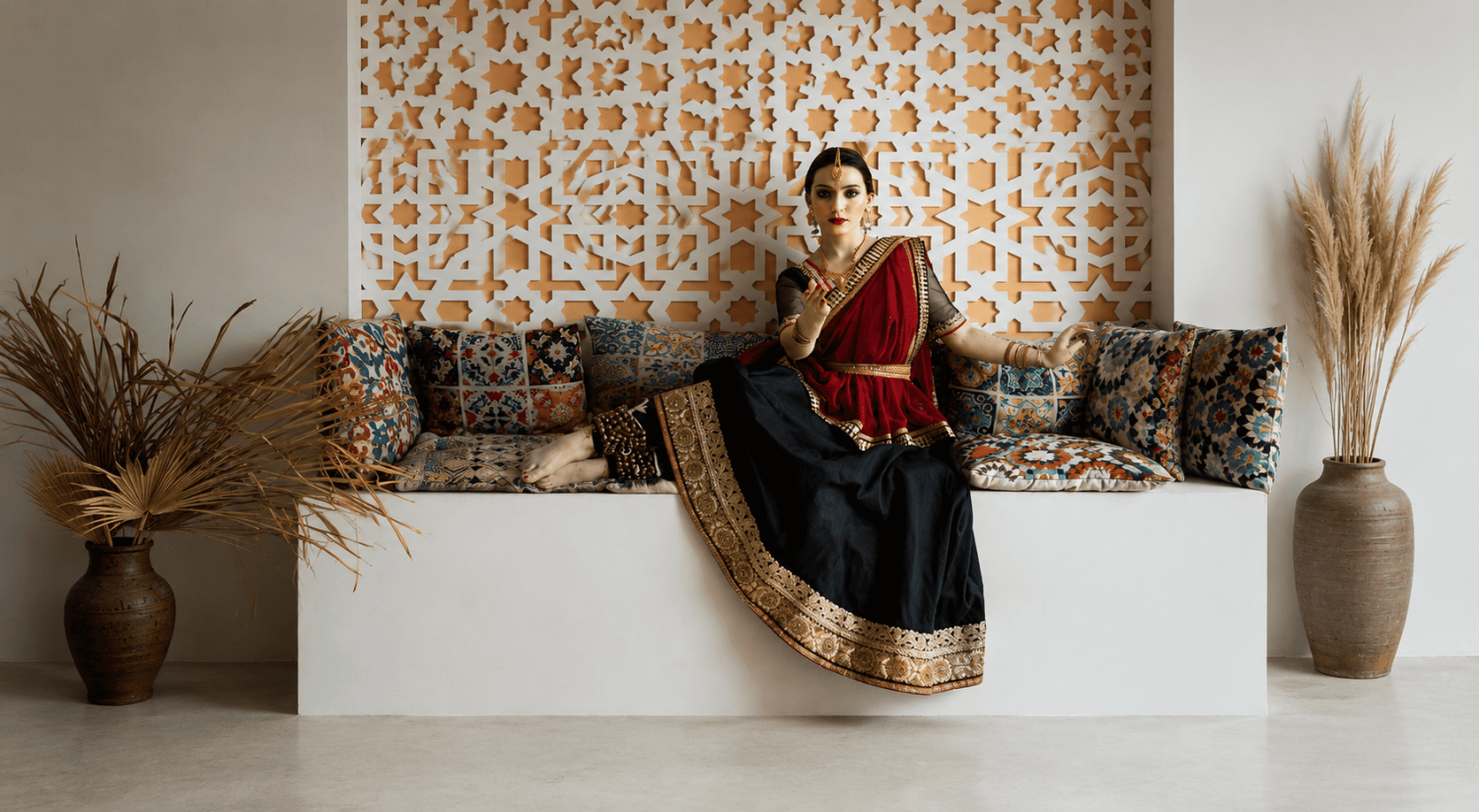
For women: a well-made Anarkali, a sharara set, a straight kurta with a good dupatta, or a saree if that is your family's practice. Modest coverage is expected, and full sleeves and a proper dupatta are the norm.
For men: a clean, well-fitted kurta with pyjama or churidar. White, ivory, cream and pale blue are traditional and remain the most common. A topi if your family observes it.
For children: new clothes, comfortable enough that they will still be wearing them cheerfully by afternoon.
Eid day, in the afternoon and evening
Visiting begins, and the day becomes social. Food, family, guests arriving and being received. The register lifts slightly.
This is where the good outfit belongs. A silk or silk-blend Anarkali, an embroidered sharara or gharara set, a well-worked saree. Better jewellery. Considered hair.
The practical constraint is that you will be hosting or being hosted, which usually means eating, serving and sitting for extended periods. Choose accordingly. A garment that photographs beautifully and cannot be sat in comfortably is the wrong garment for this day.
Colour
Eid has no prescriptive colour convention in the way that some Hindu festivals do, which leaves the palette open. What has emerged by long practice is a preference for soft, elegant and luminous shades rather than harsh brights.
- The pastels: powder blue, mint, blush, lilac, peach and pistachio. Widely worn and genuinely well suited to a daytime festival.
- The neutrals: ivory, cream, beige and white, which read as clean and dignified and which suit the occasion's emphasis on purity.
- The jewel tones: emerald, sapphire, teal and deep maroon, which come into their own for evening visiting.
- Green, which carries particular significance in Islamic tradition and is very widely chosen.
Gold accents work with almost all of the above. Silver works beautifully with the pastels.
Fabric
Eid falls in different seasons depending on the year, and the fabric should follow the weather more than the fashion.
- Summer Eid: cotton, lawn, chanderi, light georgette. Breathability is not negotiable when the day involves prayer, visiting and a long afternoon of hosting.
- Winter Eid: silk blends, heavier crepe, velvet accents, with a shawl or a jacket as a layer.
Lawn deserves a specific mention. It is a fine, light, high-count cotton, it is a cornerstone of the South Asian summer wardrobe, and it is arguably the single most comfortable fabric available for a hot-weather Eid.
The silhouettes that suit the occasion
- Anarkali: the most reliable choice. Elegant, modest, festive, comfortable.
- Sharara and gharara: traditional, dramatic and entirely appropriate. Particularly good for evening.
- Straight kurta with a fine dupatta: understated and dignified, and the right choice for anyone who finds heavy festive wear excessive.
- Saree: where family tradition supports it, and consistently elegant.
Jewellery and finishing
Restraint reads as elegance here. Jhumkas or fine studs, bangles, a delicate chain. Heavy bridal jewellery is out of register for Eid in most families, and a lightly worn outfit with excellent fabric will look considerably better than a heavily embellished one worn under a weight of gold.
Attar, mehendi and clean, well-pressed clothes complete the picture. The tradition asks for dignity and newness rather than opulence, and the outfits that observe that are almost always the best-looking ones in the room.
Related reading
Recent Posts
Home Improvement Meets Festive: Small Decor Upgrades Before the Guests Arrive
Your First Order on Seoul Street: Payment, Shipping, Tracking and Returns
Reading a Product Page Properly: Fabric, Fit, Lining and What Is Included