
 English
 Bangla
 Arabic
Reading a Product Page Properly: Fabric, Fit, Lining and What Is Included
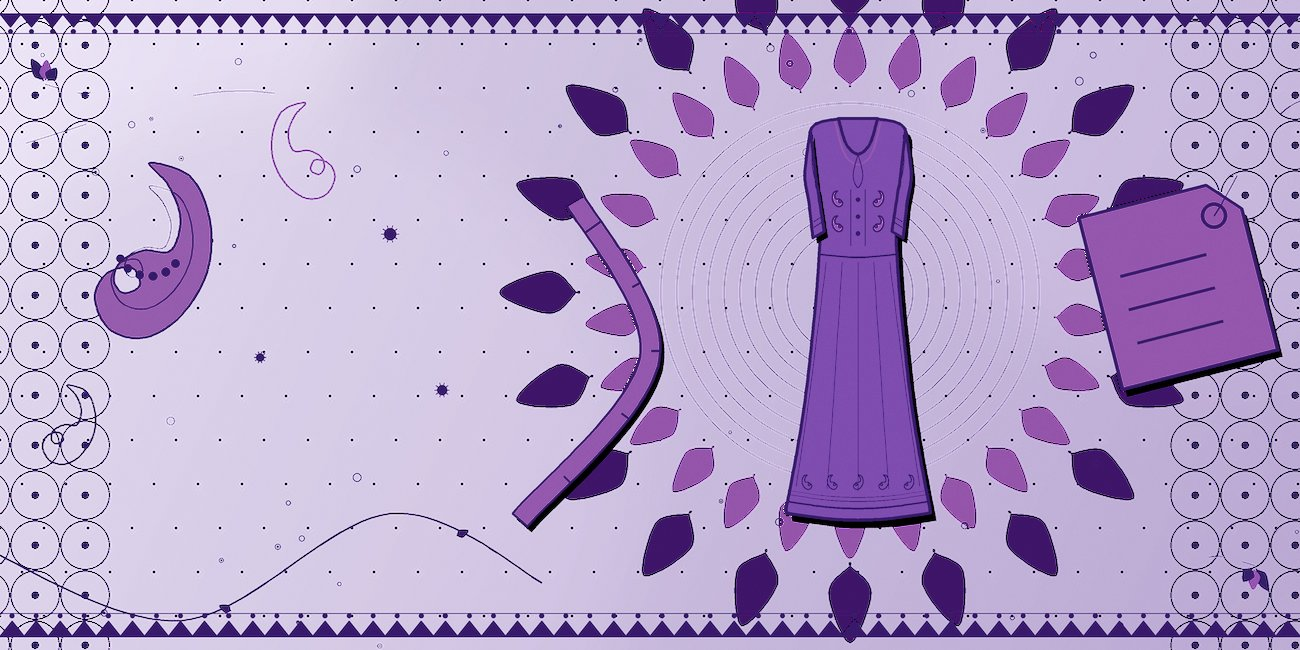
Most disappointing online clothing purchases are not surprises. The information that would have prevented them was published on the product page, and it was not read, because the photograph got there first.
Here is what to actually look at, in the order that matters.
1. What is actually included
This is the single most common source of confusion in ethnic wear, and it is worth checking before anything else.
A product photographed as a complete outfit may be sold as one piece, two pieces or three. A kurta shown with a dupatta and palazzo may include all three, or it may be a kurta with the other items styled for the photograph. A saree may or may not include a blouse piece, and where it does, that blouse piece is usually unstitched fabric rather than a finished garment.
Look for: a line reading "3-piece set," "kurta only," "with dupatta," or a component list. If the page does not say, treat the ambiguity as a warning and ask before ordering.
2. The fabric
Read this before you look at the price. The fabric determines how the garment breathes, drapes, wrinkles, washes and ages, and no discount compensates for a fabric that is wrong for the use you have in mind.
A rayon kurta and a cotton kurta that look identical in a photograph will behave completely differently in July. Silk and art silk photograph the same and cost very differently. If the fabric line simply says "blend" with no further detail, that is itself information: it usually means a synthetic-heavy blend.
3. The size chart, and which kind it is
Determine whether the chart gives body measurements (the person the garment is meant to fit) or garment measurements (the finished piece laid flat). They are not the same, and confusing them guarantees a fit error.
Then check the length. This is the number most people skip and the one that causes the most returns. A kurta arriving three inches longer or shorter than expected sits at completely the wrong point on the body, and no amount of correct chest sizing will fix that.
Compare both figures against a garment you already own and love. It is the most reliable check available.
4. Lining
A crucial detail on any georgette, net, chiffon, organza or light-coloured garment, and one that is frequently omitted from the description.
An unlined sheer kurta requires a separate slip or camisole, which is an additional purchase, an additional fitting problem and an additional expense. If the page does not explicitly state that the garment is lined, assume it is not.
5. The closure
Zip, buttons, hooks, or a slip-on with no closure at all. This matters more than it sounds. A back zip on a fitted garment may require assistance to fasten. A side zip is easier. A slip-on garment must be large enough to go over the shoulders, which sometimes means it fits loosely everywhere else.
6. Sleeve type and length
A garment described as full-sleeved may have sleeves that end at the wrist or at the mid-forearm. Sleeveless garments may or may not be intended to be layered. If sleeve coverage matters to you, and for many people it does, check the specific description rather than the photograph, which may have been styled with an inner layer that is not included.
7. Care instructions
If it says dry clean only, factor in the ongoing cost and inconvenience before you order. A garment that costs two thousand rupees and requires dry cleaning after every wear has a real cost considerably higher than its price.
8. The photographs, read critically
- Look for a flat-lay or a plain-background photograph alongside the styled ones. Styling and lighting change how colour and drape appear; a plain shot does not.
- Colour on a screen is approximate. Every screen renders differently. Expect the actual shade to vary somewhat from what you see, and be more cautious with subtle shades than with strong ones.
- Check the model reference, where it is given. A garment shown on a 5'8" model wearing size S will fall very differently on a 5'2" frame.
- Read the customer photographs in the reviews if there are any. They are usually shot in ordinary light on ordinary bodies, which makes them considerably more informative than the studio images.
9. Reviews, read for the right things
Ignore the star rating and read the text, looking specifically for comments on fit, on colour accuracy and on fabric quality. Those three recur, and where several reviewers independently say a garment runs small or that the colour is deeper than photographed, that is reliable information.
10. The return policy
Check the window, check what condition the item must be in, and check whether the category is returnable at all. Many categories are non-returnable for hygiene reasons, and that is standard practice rather than a trap, but it should be known before you order rather than after.
Two minutes
Reading a product page properly takes about two minutes. It is the highest-return two minutes available in online shopping, and it is why some people almost never return anything.
Related reading
Recent Posts
Home Improvement Meets Festive: Small Decor Upgrades Before the Guests Arrive
Your First Order on Seoul Street: Payment, Shipping, Tracking and Returns
Reading a Product Page Properly: Fabric, Fit, Lining and What Is Included