
 English
 Bangla
 Arabic
Office-Ready Ethnic: Kurtas You Can Wear to Work Without Overdressing
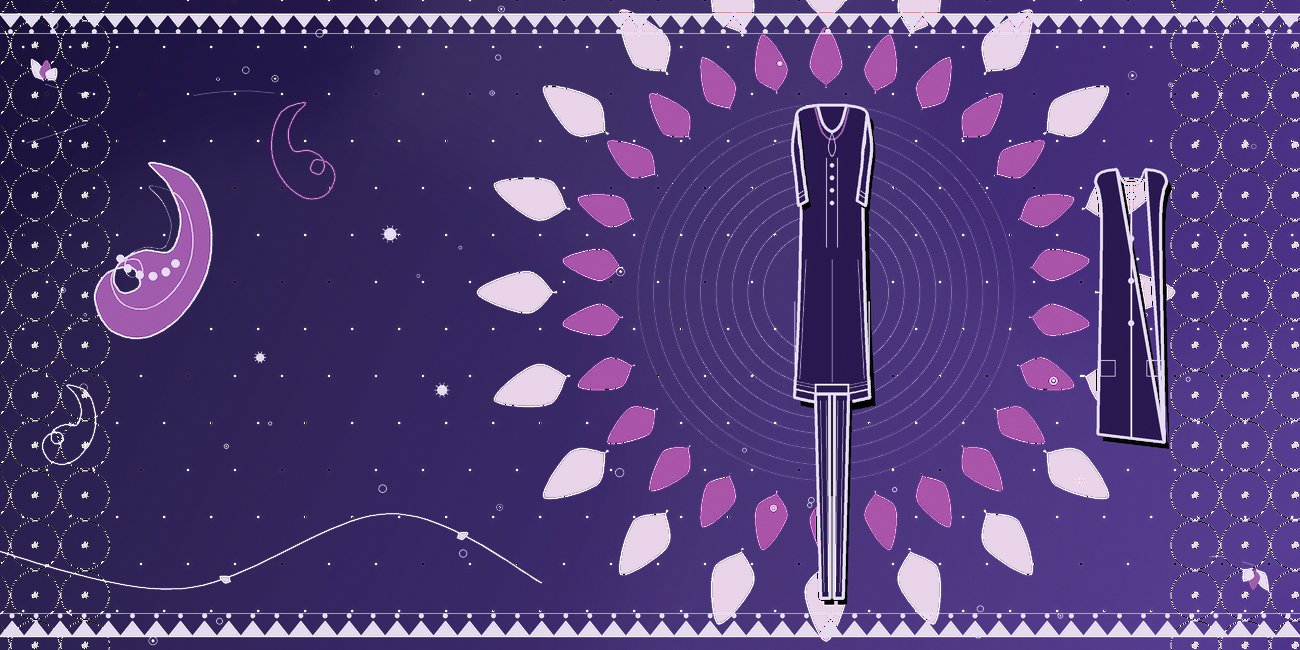
There is a persistent belief that ethnic wear belongs to festivals and weddings and that professional dress means a shirt and trousers. It is a belief worth abandoning. Ethnic wear is better suited to Indian weather than western formals, and a well-chosen kurta reads as entirely professional in almost every Indian workplace.
The distinction between office ethnic and festive ethnic is not the garment. It is the register, and it is set by four things: fabric, colour, silhouette and finish.
Fabric: matte, always
This is the single clearest divider. Shine signals occasion; matte signals work.
Choose: cotton, cotton blends, linen, chanderi cotton, khadi, structured rayon.
Avoid: silk, satin, brocade, organza, anything with a sheen, and anything with sequins, mirror work or metallic thread.
A cotton kurta with fine self-embroidery or a subtle print reads as tailored. The same silhouette in shot silk with zari reads as a wedding guest who took a wrong turn.
Colour: restrained, but not dull
Office ethnic works best in the register that western formalwear occupies: navy, black, charcoal, ivory, beige, olive, maroon, dusty pink, muted teal, slate blue.
This does not mean avoiding colour. A solid mustard or bottle green kurta is entirely professional. What reads as festive is high saturation combined with high contrast: bright pink with gold, or emerald with heavy embroidery. Keep the palette either muted or solid, and the outfit stays in the right register.
Prints work provided they are small in scale and low in contrast. Small florals, geometric blocks and fine stripes are safe. Large-scale ornate motifs are not.
Silhouette: structured, not flowing
Choose: straight kurtas, A-line kurtas, short kurtas ending at or above the knee, and Indo-western tunics.
Avoid at work: full Anarkalis, floor-length silhouettes and heavy flare. They are beautiful and they are unmistakably occasion wear.
Pair with cigarette pants or straight trousers, which are the professional bottoms. A palazzo can work if it is in a solid, structured fabric, but it takes the outfit noticeably more relaxed.
The dupatta question
In most modern office environments, skip it. The dupatta is the element that most strongly signals occasion, and without it the same kurta reads as a well-cut tunic.
If your workplace or your preference calls for one, choose a plain cotton or a fine stole in a solid colour, and drape it simply as a stole rather than in a full pleated shoulder drape. Keep it out of the way of your hands and your work.
Finishing: this is where it is won
Two people can wear the same kurta and one will look professional while the other looks like they came from a family lunch. The difference is almost entirely in the finish.
- Press the garment. A creased kurta reads as unprofessional in a way a creased shirt somehow does not. This is unfair but it is true, and it is easily solved.
- Wear closed or structured footwear. Loafers, block-heeled sandals, mules or clean juttis. Rubber flip-flops undo the entire outfit instantly.
- Keep jewellery minimal. Studs, a watch, one ring, a single fine chain. Jhumkas and bangle stacks are festive markers.
- Carry a structured bag. A tote or a satchel, not an embroidered potli.
Five pieces that will cover a working week
- A white or ivory cotton straight kurta.
- A navy or charcoal A-line kurta in a matte fabric.
- A small-print kurta in muted colours.
- Black cigarette pants.
- Ivory or beige straight trousers.
Five pieces produce well over ten combinations, all of which are professional, all of which are comfortable in Indian heat, and none of which require a jacket in a room where the air conditioning has failed.
For men
The same logic applies. A well-fitted solid cotton kurta in navy, white, grey or olive, worn over straight trousers or dark denim with clean leather loafers and a Nehru jacket if the meeting is formal, is entirely appropriate business attire in most Indian workplaces and considerably more comfortable than a suit.
The point
Ethnic wear at work is not a compromise or a concession. Correctly chosen, it is better clothing for the climate you actually live in. The only thing that needs to change is the register, and the register is set by fabric, colour, structure and finish, not by the garment itself.
Related reading
Recent Posts

Home Improvement Meets Festive: Small Decor Upgrades Before the Guests Arrive
Your First Order on Seoul Street: Payment, Shipping, Tracking and Returns

Reading a Product Page Properly: Fabric, Fit, Lining and What Is Included